Advance Your Scientific Knowledge
Discover comprehensive science tutorials, interactive learning paths, and a supportive community. Whether you're a student, educator, or science enthusiast, we have resources to help you excel.

Discover comprehensive science tutorials, interactive learning paths, and a supportive community. Whether you're a student, educator, or science enthusiast, we have resources to help you excel.
Explore our expertly crafted science courses with interactive content, hands-on exercises, and comprehensive learning materials.
 Beginner
Explore the building blocks of life, from cells to ecosystems. Perfect for beginners with no prior biology knowledge.
 Intermediate
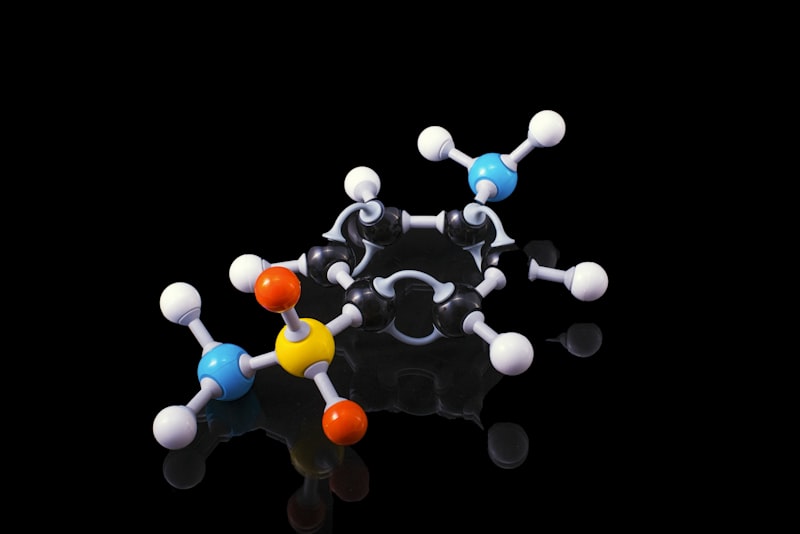
Discover the fascinating chemistry behind common household items, food, and materials we encounter daily.
 Advanced
Demystify the complex world of quantum mechanics with intuitive explanations and practical applications.
 Beginner
Journey through the universe, from our solar system to distant galaxies, and learn about celestial phenomena.
Follow structured learning paths designed by experts to build your knowledge from fundamentals to advanced concepts.
Learn the basic concepts of biology, including cell structure, DNA, and biological systems.
Start HereDive deeper into cell functions, genetic principles, and inheritance patterns.
ExploreUnderstand ecosystems, biodiversity, and the interactions between organisms and their environment.
ExploreMaster advanced concepts in molecular biology, biotechnology, and genetic engineering.
ExplorePreview how our lessons combine clear explanations with interactive elements for effective learning.
Chemical bonds are forces that hold atoms together to form molecules or compounds. These bonds form when electrons are shared or transferred between atoms, creating stable arrangements.

Figure 1: Visualization of different types of chemical bonds
There are three primary types of chemical bonds:
Ionic bonds form between metals and non-metals. In this type of bond, electrons are completely transferred from one atom to another, creating positively charged ions (cations) and negatively charged ions (anions).
For example, when sodium (Na) and chlorine (Cl) form an ionic bond, sodium loses an electron to become Na⁺, and chlorine gains that electron to become Cl⁻, forming sodium chloride (NaCl) or table salt.
Which of the following best describes an ionic bond?
Covalent bonds form between non-metals. In this type of bond, atoms share electrons to achieve a stable electron configuration. Covalent bonds can be single, double, or triple, depending on how many pairs of electrons are shared.
Analyzing H2O...
Bond type: covalent
{atoms: ["H", "H", "O"], bonds: 2, bondPairs: 2, structure: "bent"}
Access supplementary materials to enhance your learning experience and deepen your understanding.
Comprehensive study guides for all science subjects, perfect for exam preparation and review.
Home-friendly lab experiments with step-by-step instructions and safety protocols.
Interactive tools for solving science problems, converting units, and visualizing data.
Visual explanations of complex concepts with expert instructors and animations.
Self-assessment tools with instant feedback to gauge your understanding and progress.
Quick-reference guides, formulas, constants, and tables for all science disciplines.
Connect with fellow learners, share insights, ask questions, and participate in discussions with our supportive community.
 Sarah Johnson
I'm trying to understand the mechanism of enzyme catalysis better. Can someone explain how enzymes lower activation energy and what factors can inhibit enzyme function?
 Michael Chen
I'm studying nuclear physics and I'm confused about the energy release mechanisms in fusion vs. fission reactions. Could someone explain the key differences and why fusion is more challenging to achieve on Earth?
Find answers to common questions about our educational resources and learning platform.
Your progress is automatically tracked as you complete lessons, quizzes, and assignments. You can view your overall progress on the course dashboard and detailed progress within each module. Progress is synced across all your devices when you're logged into your account.
Most of our courses are self-paced, allowing you to learn on your own schedule. You can start anytime and progress through the material at a pace that works for you. Some advanced courses may have cohort-based options with scheduled live sessions and group projects.
Yes, many of our resources are available for download, including PDF study guides, practice worksheets, and reference materials. Video content can be downloaded for offline viewing through our mobile app. Some interactive elements like simulations require an internet connection.
We offer multiple support channels for learners. You can post questions in the course discussion forums, join weekly Q&A sessions with instructors, or connect with our community of learners. For Premium members, we also offer 1-on-1 tutoring sessions with subject matter experts.
Yes, we provide certificates of completion for all finished courses. These certificates indicate the course content, duration, and your completion date. Premium certificates with verified assessment are available for selected courses at an additional fee.
Reference our comprehensive glossary of scientific terms with clear definitions and examples.